
If you’re serious about a career where economic theory meets real-world policy, the RBI Grade B (DEPR) exam is one of the most rewarding paths in India. It offers a rare combination: intellectual rigor, policy relevance, and long-term career stability. Here’s a complete guide—exam structure, job profile, and how Bliss Point Studies helps you convert preparation into selection.
Why RBI Grade B (DEPR)?
- Direct role in policymaking: Work on inflation, growth, financial stability
- Research-driven career: Apply econometrics, macro, and public economics
- Prestige + work-life balance: A top-tier central banking career
Exam Structure (DEPR)
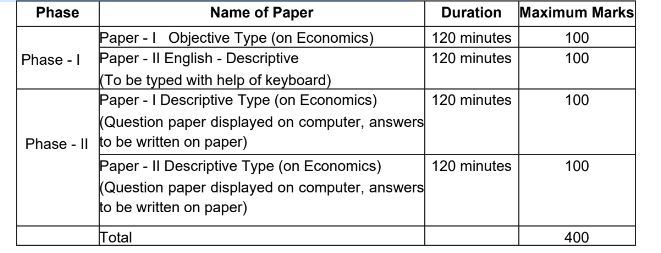
Interview (Final Stage) – 75 Marks
Total (Phase I + Phase II + Interview) 475 Marks
- Focus on clarity of thought, economic understanding, and application
Phase – I – Paper I Objective Type (on Economics)
- Microeconomics (Theories of consumer’s demand; Production; Market Structures and Pricing; Distribution; and Welfare Economics)
- Macro Economics (Theories of Employment, Output and Inflation; Monetary Economics; IS-LM Model; Schools of Economic Thought)
- International Economics (Theories of International Trade; Balance of Payments; Exchange Rate Models)
- Theories of Economic Growth and Development (Classical neo-classical approaches to economic growth and major theories of economic development)
- Public Finance (Theories of taxation and public expenditure and Public Debt Management)
- Environmental Economics (Green GDP, Environmental Valuation, Environmental policy instruments)
- Quantitative Methods in Economics (Mathematical and Statistical Methods for Economics, Ordinary Least Square Regression)
- Current developments in Indian Economy (Growth, inflation, poverty, unemployment, financial sector developments, external sector developments, fiscal developments, agriculture, industry, infrastructure, and services)
Phase – I – Paper-II Descriptive Type (on English)
The paper on English shall be framed in a manner to assess the writing skills including expression and understanding of the topic.
Phase – II – Paper – I Descriptive Type (on Economics)
(Question paper displayed on computer, answers to be written on paper)
Microeconomic Module
- Consumer Theory: Cardinal and Marginal Utility Analysis, Consumer Surplus, Indifference Curve Analysis, Price, Income and Substitution Effects, Game Theory
- Production Theory: Forms of Production function; Laws of Returns to Scale; Partial Equilibrium Vs General Equilibrium Analysis
- Market Theory: Pricing under different market structures
- Distribution Theories: Ricardo, Marx, Kalecki and Kaldor
- Welfare Economics: Pareto Optimality, Schools of Welfare Thought including Arrow, Coase and Sen
Phase – II – Macroeconomic Module
-
National Income Accounting: Various methods for measurement of National Income
-
Theory of employment and Output: Classical and Neo-classical approaches, Keynesian theory of Employment and output, Post-Keynesian developments, Business Cycles
-
Inflation: Types of Inflation, Philip’s curve, Taylor’s Rule, Lucas Critique
-
Money and Banking: Quantity theory of Money, Neutrality of money, IS – LM Model and AD-AS Models, Money Multiplier, Monetary Policy – Scope, Objectives and instruments, Inflation targeting
-
Theories of Economic Growth and Development: Theories of growth, Classical and neo-classical approaches, Theories of Economic Development
-
International trade and Balance of payments: Theories of international trade, Determination of exchange rates, Impossible Trinity
-
Public Finance: Theories of taxation, Theories of public expenditure, Theories of public debt management
Note: Equal weightage will be given to Microeconomic and Macroeconomic modules.
Phase – II – Module on Quantitative Methods in Economics
-
Mathematical Methods in Economics: Differentiation and Integration, Optimisation, Sets, Matrices, Linear algebra and Linear programming
-
Statistical Methods in Economics: Measures of central tendency and dispersions, Probability, Time series, Index numbers.
-
Econometrics and advanced Applications: Regression analysis, Panel data econometrics, Time Series econometrics, Basics of Bayesian Econometrics, Basic application of Artificial Intelligence/ Machine Learning
Phase – II – Module on Indian Economy – Policy and Trends
-
Fiscal policy in India: Evolution, scope and limitations, current trends
-
Monetary Policy in India: Evolution, Functions of the Reserve Bank of India, Monetary-Fiscal coordination, Inflation targeting, Operating framework of Monetary Policy, Current trends
-
Banking and financial sector development in India: Banks and other constituents of Indian financial markets and related developments, Current trends
-
Inflation in India: Trends and drivers
-
External sector developments in India: Exchange rate management, external debt, Balance of payments, Current trends
-
Sectoral and other developments in India: Agriculture, industry, services and social sector-related developments
Note: Equal weightage will be given to Quantitative Economics and Indian Economy-related modules.
Pattern of Exam – Click Here
Expected Cut – Off | How much to Score to qualify – Click Here
What makes Phase I crucial?
- It’s the elimination stage—many well-prepared candidates fall short here
- Requires MCQ mastery, quick recall, and smart elimination
- Strong foundation + targeted practice is non-negotiable
Job Profile of RBI Grade B (DEPR)
As a DEPR Officer (Economist), your work goes far beyond routine administration:
Core Responsibilities
- Economic Research: Inflation, GDP, employment, sectoral studies
- Policy Inputs: Support for monetary policy and regulatory decisions
- Data Analysis: Use of econometrics, statistics, and models
- Publications: Contribute to RBI reports, bulletins, and papers
Growth Path
- Progress from Assistant Manager → Manager → Senior Economist roles
- Opportunities for higher studies (often sponsored) and international exposure
 In short: You don’t just study economics—you shape it.
 The Preparation Challenge
Most aspirants struggle with:
- Converting theory into MCQ performance
- Managing time pressure in Phase I
- Lack of structured revision + testing
- Inconsistent practice
This is where a focused, exam-oriented approach becomes the differentiator.
Bliss Point Studies – Phase I Fast Track Advantage
Upcoming Batch – Click Here
With the notification expected around 28 April and the exam likely in June, the window is short. Bliss Point Studies offers a Phase I Fast Track Course designed specifically for this crunch period.
What the Course Delivers
- MCQ-Based Lectures
Focused sessions that convert theory into exam-ready questions - Comprehensive Test Series
Sectional + full-length tests with detailed solutions & discussion - Exam-Oriented Coverage
Only what matters for Phase I—high-yield topics, PYQs, trends - Speed & Accuracy Training
Techniques for elimination, time management, and precision - Structured Revision Plan
Ensures you revise multiple times before the exam
Why Fast Track Now?
- Limited time demands smart preparation, not just hard work
- Early starters gain a massive edge in MCQ accuracy
- Consistent testing builds confidence and exam temperament
Final Takeaway
RBI Grade B (DEPR) is not just an exam—it’s an entry into India’s economic decision-making ecosystem.
With the right strategy, disciplined practice, and targeted guidance, cracking Phase I becomes achievable and predictable.
Bliss Point Studies’ Fast Track Course is designed to help you bridge the gap between preparation and performance—so that when the exam arrives, you’re not just ready… you’re ahead.
Batch Starts: 28 April
Focus: Phase I (Objective MCQ)
Reach out to enroll and begin your focused preparation journey
Upcoming Batch – Click Here
- Notification Released – Click Here